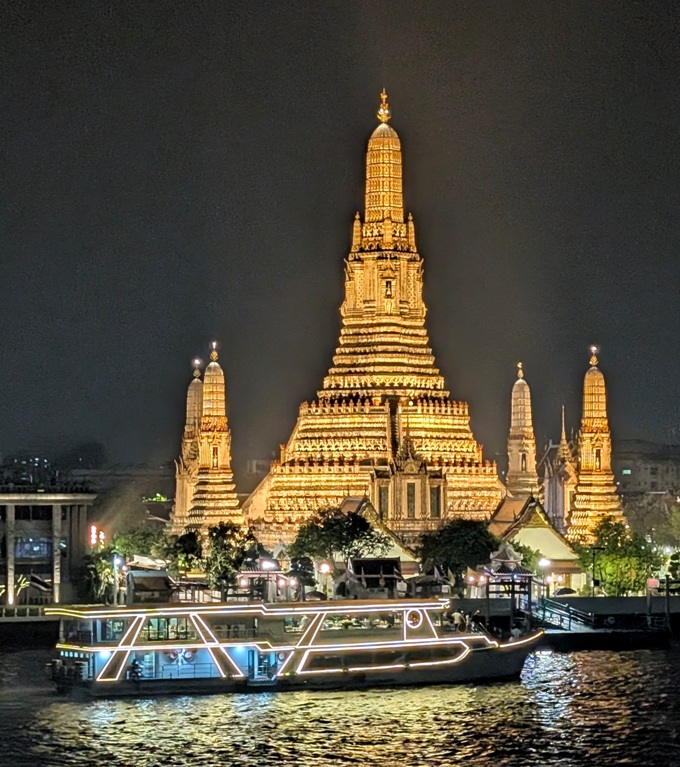
It’s been 40 years since I last visited Bangkok and some things haven’t changed. The people are still friendly, helpful and happy, the iced Thai Milk Tea is still so so sweet and the golden temples still glitter in the sun. Words like hot, busy, disorderly and humid come to mind, but I feel safe and excited to be back. Bangkok is magical at night and the Singha beer is still the coldest and the best.
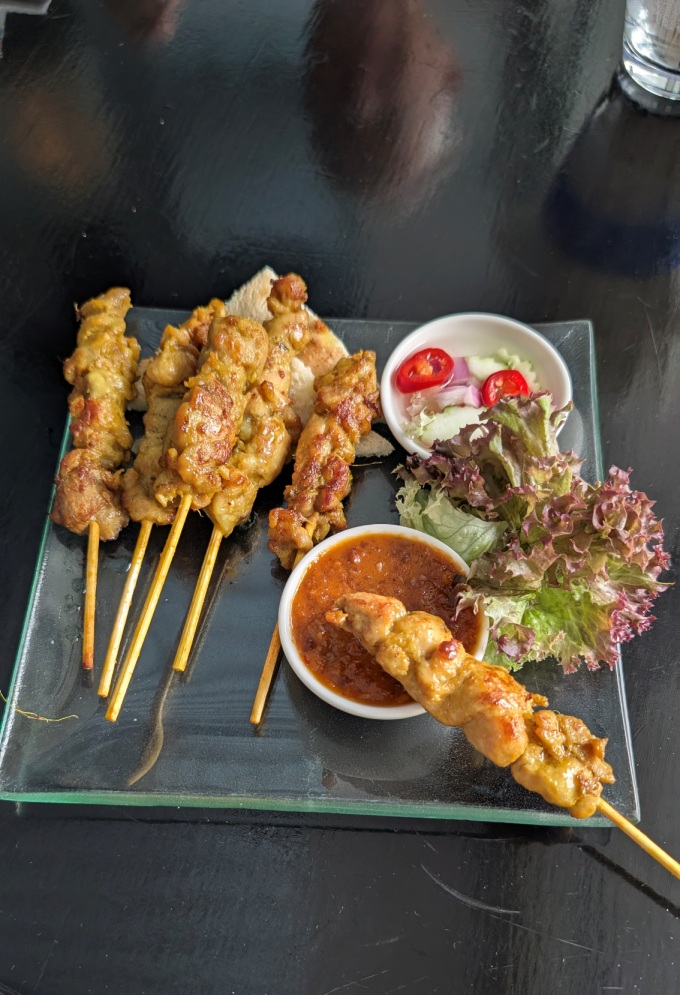

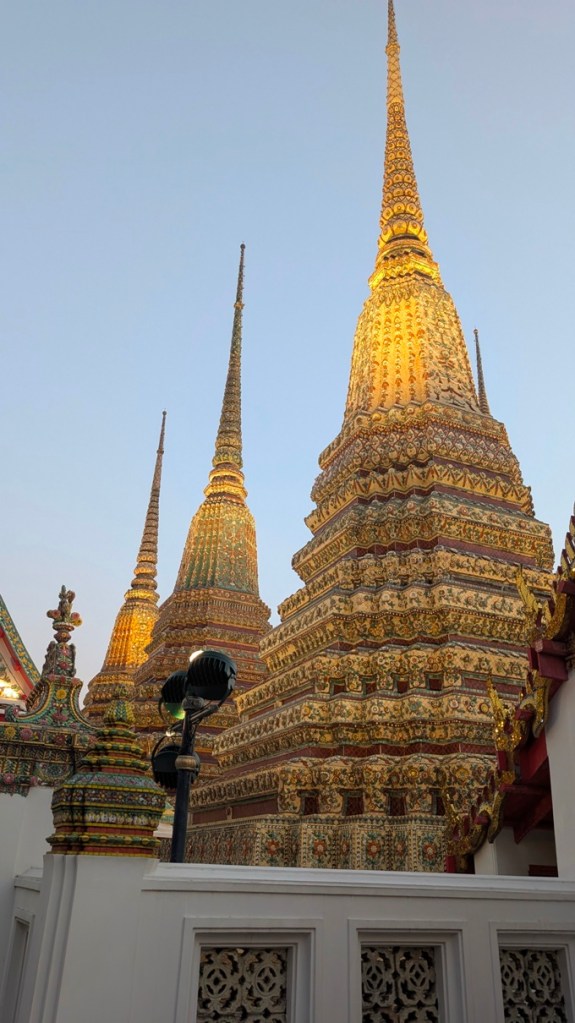
Our five day stay in Bangkok is all about exploring the sights of this vibrant city and it’s surrounds while staying at its beating heart on the banks of the Chao Phraya River. Our luxury boutique hotel is Riva Arun Bangkok, a sanctuary of calm and sophistication amid the excitement and colourful chaos that is Bangkok.
We have 3 organised tours booked which include: a visit to some of Bangkok’s most important temples; a tour to the ancient Thai Capital – Ayatthaya; and a day trip to the famous Maeklong Railway Market (where stall holders must give way to trains) and a visit to the Amphawa Floating Market (without hordes of tourists).

Join us as we explore the culture and magic of Bangkok on these three well-organised and enjoyable tours. Links are at the end of each tour.
1. A Journey to Ayutthaya
On our first morning we are up early, on tour to the Ancient Thai Capital – Ayatthaya. We are travelling with a small group of other like-minded explorers on a tour booked through booking.com, called ‘Ayatthaya Sunset Boat Ride & Famous Attraction’. We meet our Tour Guide from “Sightseeing Pattaya’ at the Hilton Garden Inn Bangkok Silom, after a short ferry ride followed by an easy walk to the hotel.
Ayutthaya is Thailand’s ancient capital, and a UNESCO World Heritage site, situated 85km north of Bangkok. This historical park is all that remains of the Siamese capital, which flourished from 1350 until 1767, when the Burmese sacked the ancient island city and brought its reign to an end.
Our first stop is Wat Yai Chai Mongkhon (or the Great Monastery of Auspicious Victory), a prominent Buddhist temple in Ayutthaya with a storied history. Constructed in the 14th century, the temple boasts a large stupa that dominates the skyline, which was established by King Naresuan to commemorate his victory over the Burmese, and it contains a colossal statue of a reclining Buddha in the grounds. Visitors can climb the prang (stupa) for panoramic views of the area surrounding Wat Yai Chai Mongkhon which stands as a testament to Ayutthaya’s cultural and architectural heritage.
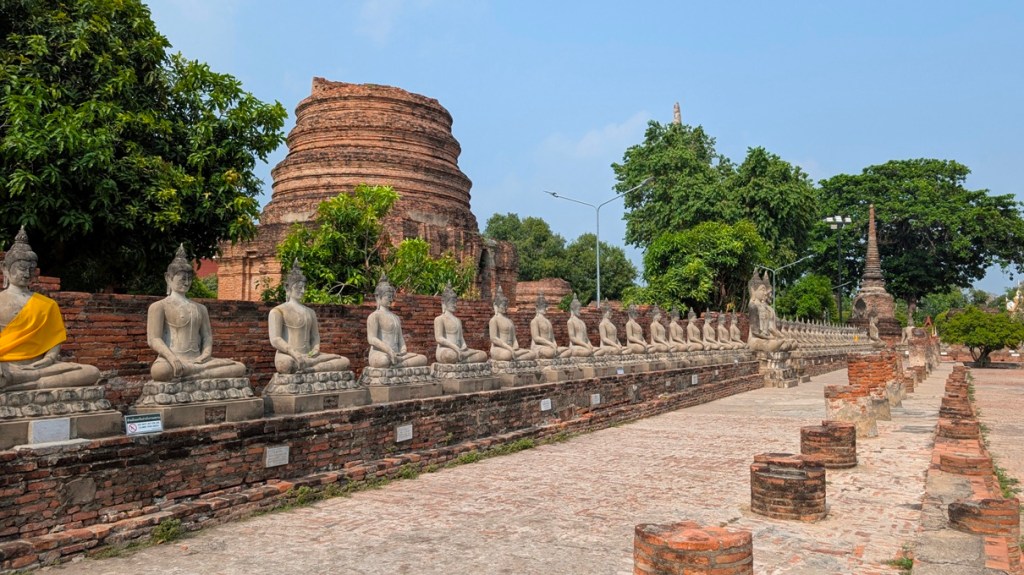
We spend time wandering the ruins of this ancient site with its rows and rows of Buddha statues, and gaze in awe at the beautiful, white, reclining giant Buddha (46m long) lying outside amongst the ruins and looking very serene.

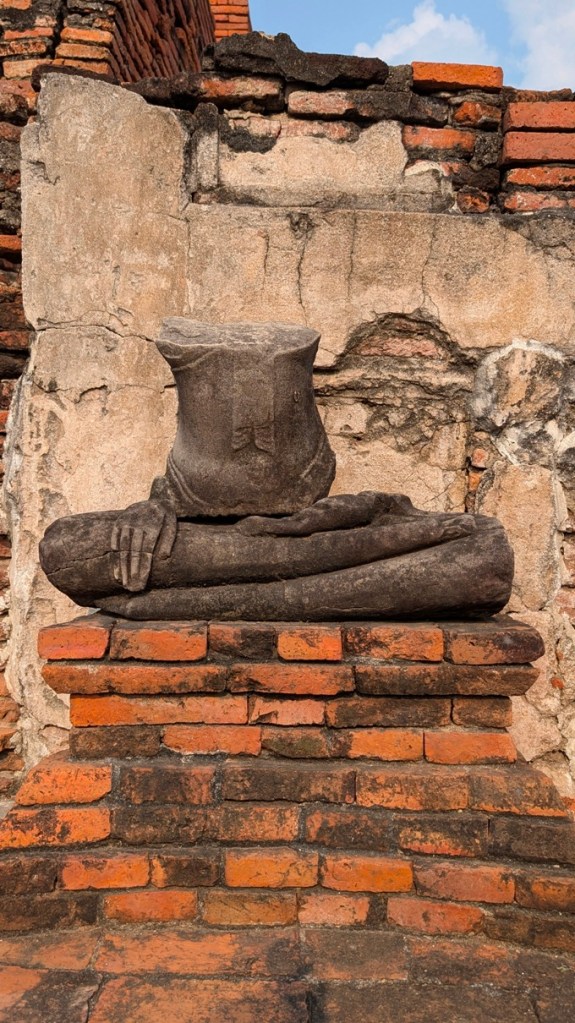
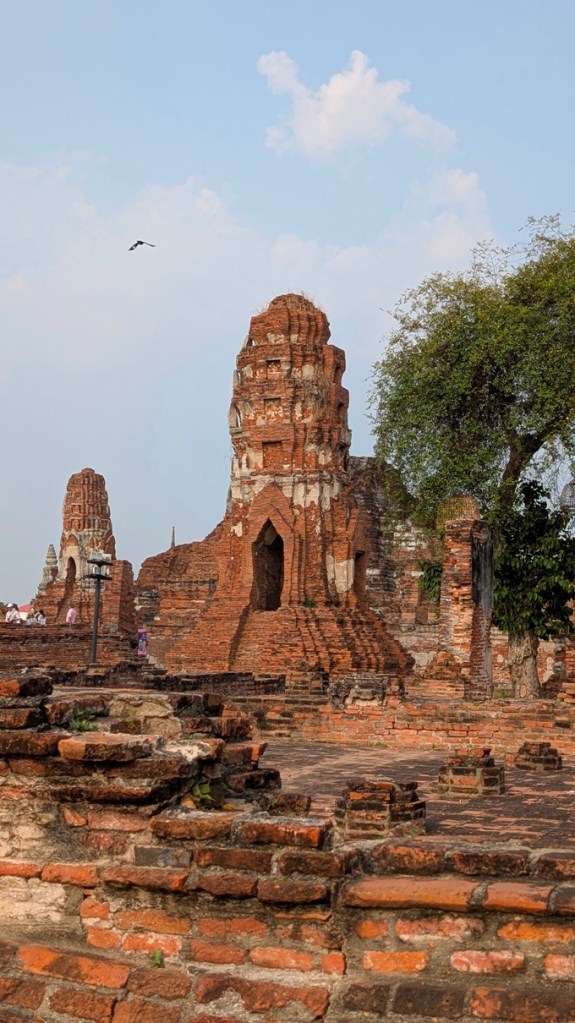
Our next stop is at Wat Maha That, a historic Buddhist temple located in Ayutthaya, dating back to the 14th century. I am excited to visit this temple just to see its renowned, iconic Buddha head entwined in the roots of a banyan tree. But the temple ruins themselves are just as enticing, their red brick layers and scattered headless Buddha statues are a reflection of the grandeur of the ancient Ayutthaya Kingdom.

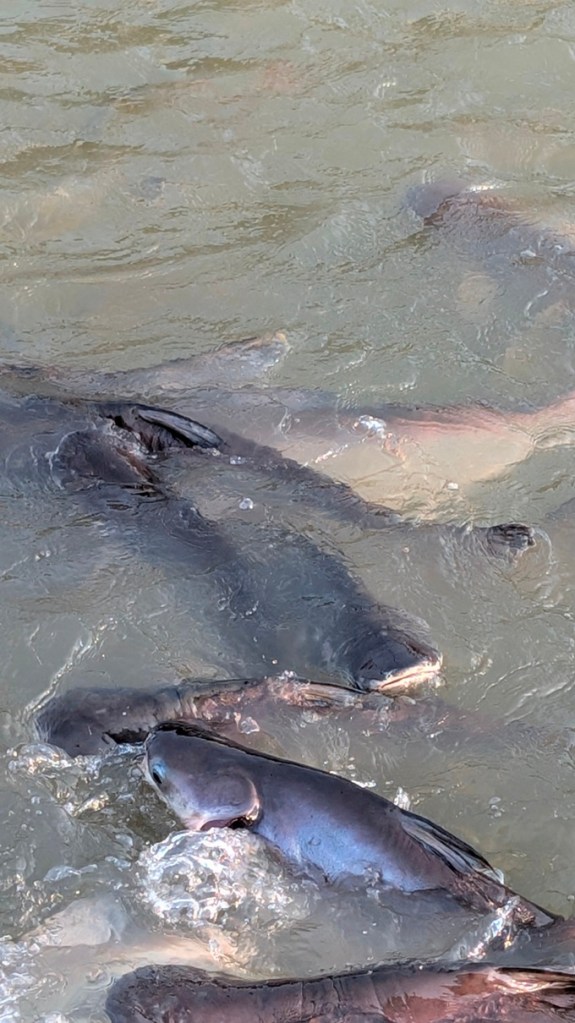
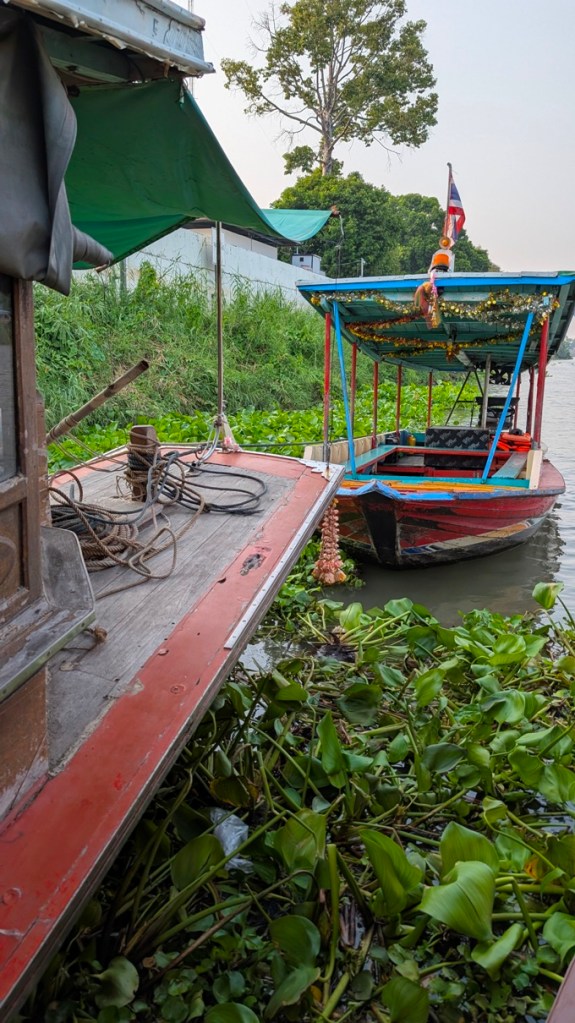
Next, as promised on the itinerary, we board a traditional Thai Boat and head down the Chao Phraya River as the sun begins to drop in a firey red ball towards the horizon. We are handed a long bread stick each and entertained by a Thai dancer adorned in silks, performing a traditional Thai dance. As she finishes her routine, we pull up at a pier and are immediately fish-bombed. They are everywhere, flapping and swirling in the river below us, vying for our meagre bread stick crumbs.

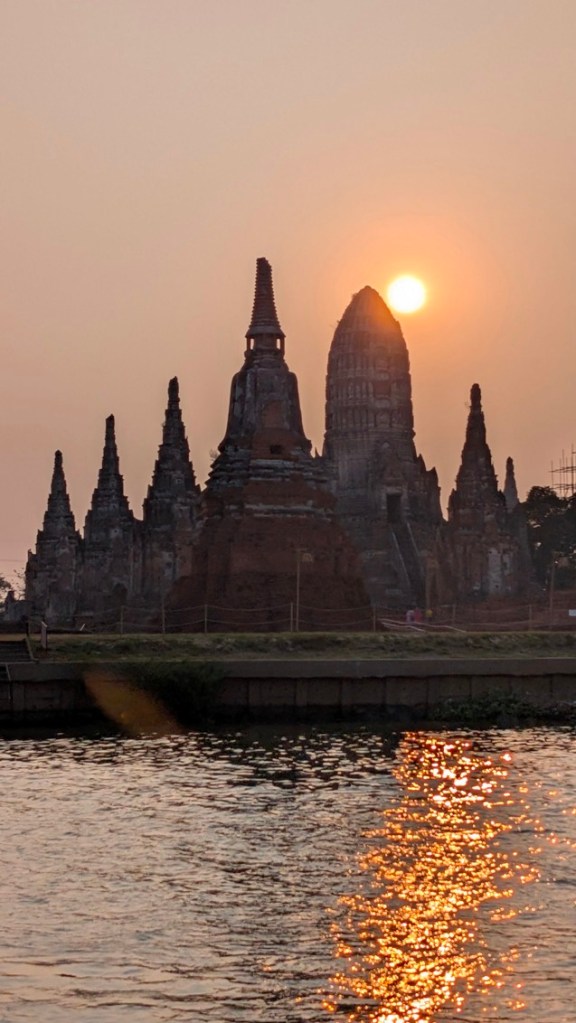
When our bread supplies are exhausted, as the sunset unfolds, the captain cuts the engine and we float about in front of Ayutthaya’s mystical ruins, taking photos as the sun sinks between the stupas in the background. What more could we ask for? Dinner perhaps?
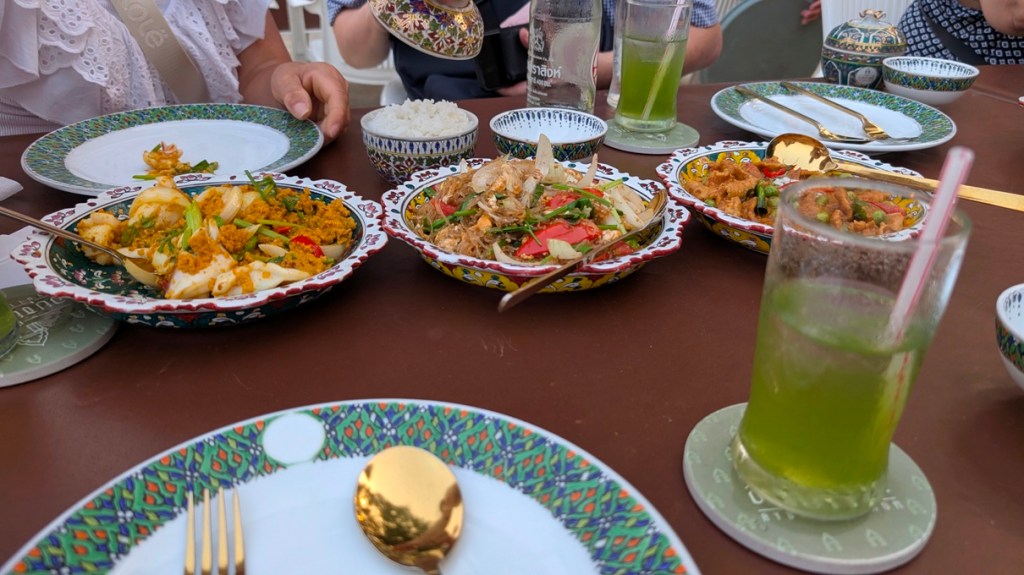
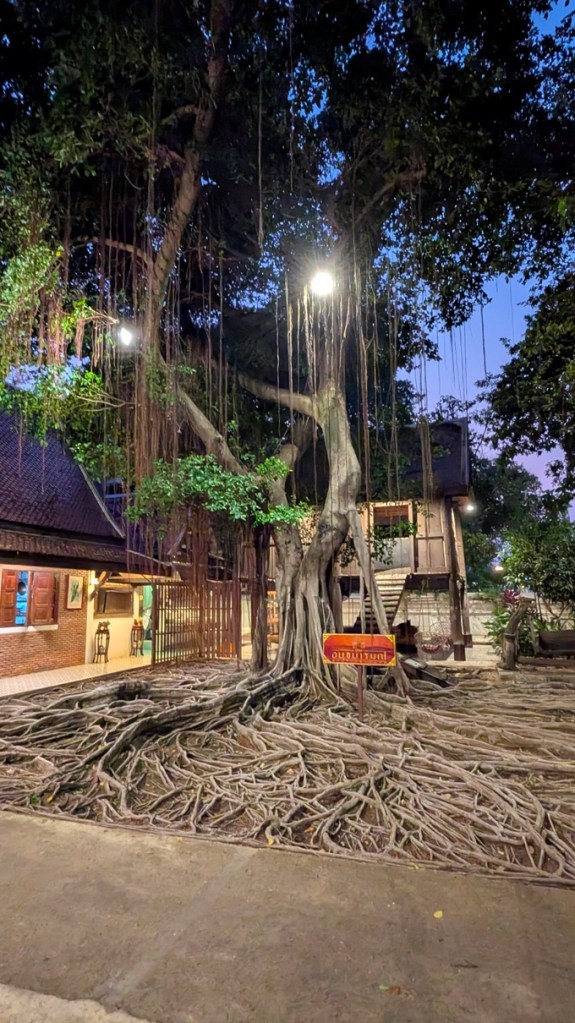
We return to our starting point and disembark onto the terrace of ‘Ayatthayarom Restaurant’. Here we are treated to a Thai banquet of delicate dishes both familiar and new. It is the perfect ending to a fulfilling and happy day of exploring. After, as we head back to the bus, we wander through the compounds of this delightful Thai establishment were tree roots spread out across the ground in an artistic fashion and shelves of pottery adorn the walls.
It is truly inspiring to witness the beauty and serenity of ancient Thailand, and we ponder this as we arrive back into the ‘new’ capital with its neon signs and electric, fast paced energy.
From Bangkok: Ayutthaya Heritage Tour with Sunset Boat Ride (similar tour)
2. Markets & Fireflies
Once again we are travelling on a tour, but this time, one booked through Get Your Guide. Our meeting place today is at the National Stadium BTS Station, Exit 2 (2nd floor) and our guide is Ohm. The best thing about touring in Bangkok is that everyone uses WhatsApp – from car transfer drivers to tour guides – and they send photos of themselves (or their cars with rego plates) so that we can easily recognise them! It’s a simple and effective system that uses wifi data only and works a treat. Our tour is called ‘Maeklong Railway & Amphawa Floating Market Day Trip’, but the extra appeal is that it’s not just markets.

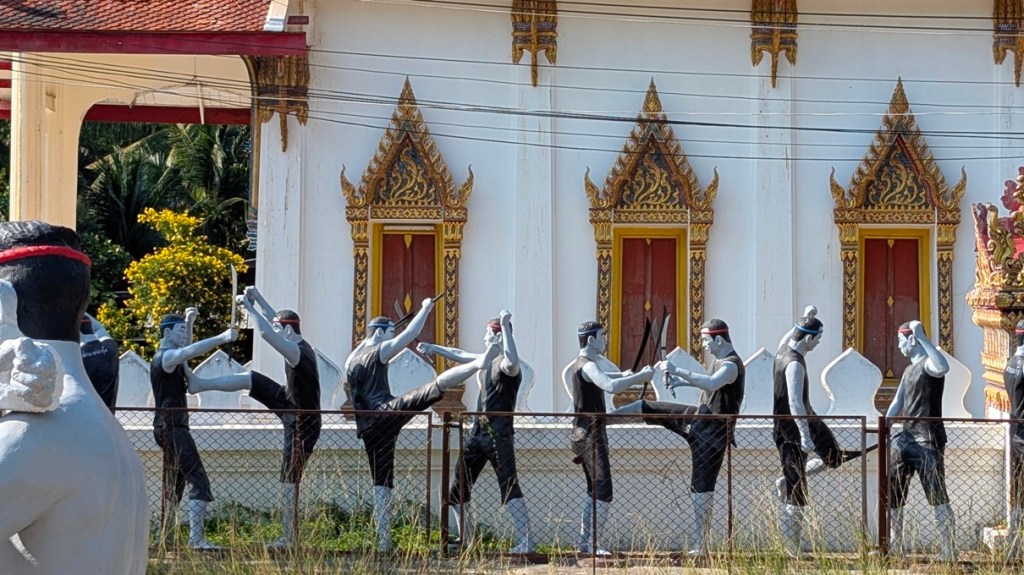
En-route, we take an interesting detour to discover Wat Bang Kung, a hidden temple embraced and consumed by Banyan tree roots! Continuing on from our exploration of Thai history at Ayutthaya, we find a shrine and statues inside honoring soldiers who defended Thailand in the 1800s, evoking that sense of history we are craving. Inside, also sits a golden Buddha image, where locals and visitors alike come to make offerings. The temple grounds feature memorials to King Taksin’s army, including life-size statues of warriors in combat – an arresting sight.
Maeklong Railway Market, also known as Siang Tai (life-risking) and Talad Rom Hub or Hoop Rom (closing umbrellas), is in the Samut Songkhram Province of Thailand, approx 82km south of Bangkok. Here we step off the beaten path at this 100-year-old market, famous for its fresh produce, souvenirs, and trinkets, and watch as a train thunders through the heart of the market, causing vendors to swiftly pack up and reset.
It is one of the largest fresh seafood markets in Thailand and runs for 100 metres along each side of the Maeklong Railway’s train tracks.
It’s open from 6am to 6pm, and trains pass through the market throughout the day. When the train horn sounds the shop fronts, awnings and produce must be moved back from the rails to allow the train to pass, and then immediately after, are returned – and it’s business as usual!
You’d think this would be chaotic enough, but there are also tourists aplenty here, wandering along the tracks, stopping for coffee, browsing the stalls and waiting….! When the train approaches, they disperse to both sides of the tracks, anticipation and phones held high.
We are a part of this market madness too, holed up in front of a fish merchant, jostling with other like-minded global travellers for a front row view of the train’s slow and steady progress through the throng.
As it approaches we witness the incredible awning cha cha as they are pulled back from the tracks, followed by a swarm of tourists chasing after the train as it heads to the station at the market’s end. It stops and the selfie stronghold takes over.
People climb aboard for a look around, take more photos, and then return to the market stalls to continue their browsing.
It’s frenetic chaos in slow motion, and a fascinating moment in time which will soon be repeated when the next train arrives a couple of hours later. Not to be missed!
Our next stop is the Amphawa Floating Market, the second largest floating market in Thailand. The largest and busiest is Damnoen Saduak, but Amphawa is by far the most charming. We are now 1.5hrs south of Bangkok the Samut Songkhram province.
Amphawa is an afternoon floating market, (open from 12 – 8pm Friday to Sunday) and we are experiencing authentic Thai canal life without battling the tourist hordes. People are strolling through the canal-side market, eating fresh seafood from boats floating alongside and soaking up the vibrant riverside atmosphere.
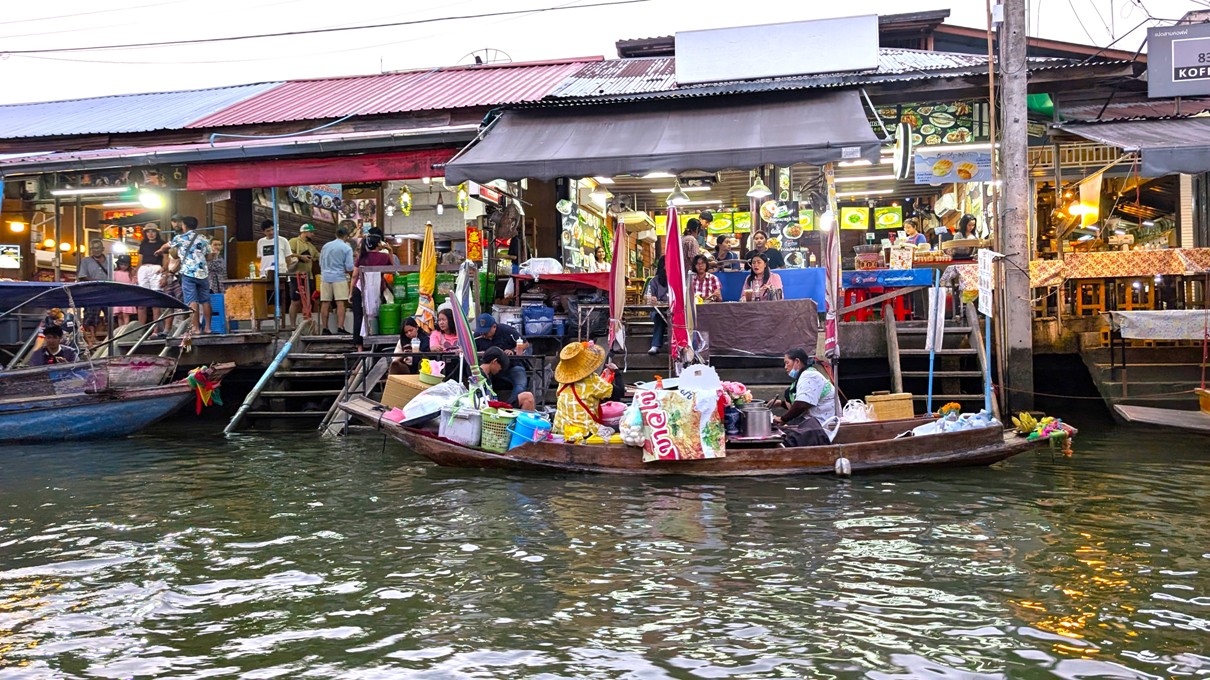
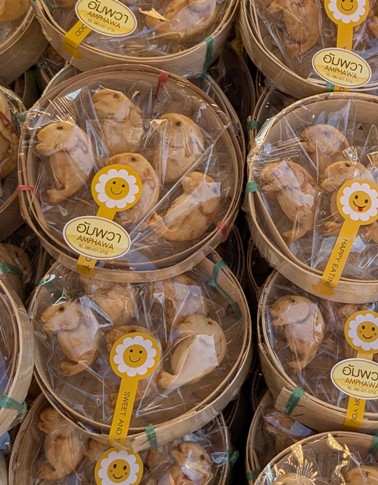
Like many of Thailand’s floating markets, Amphawa evolved during the reign of Rama IV, when between 1866 and 1868 a 32km long canal was created connecting the Mae Klong and Tha Chin Rivers. When the inhabitants of the area then carved out 200 more smaller canals, the floating markets began to evolve. The water network systems became so busy, that Bangkok soon became known as the ‘Venice of the East’ by early European visitors.


As dusk falls, we climb into a longtail boat with our fellow travellers and leave the markets behind, riding out along the Maeklong River as the sun sets – to find fireflies. On the way we discover the many old wooden houses lining the canals and get a real taste of true riverside life.

After a serene sunset on the water and a successful firefly spotting session along the river banks, our driver treats us to an exhilarating speedboat-style ride back once more to the calmness of the market canals. Our driver and comfy air conditioned bus await, ready to whisk us back once again to Bangkok and 21st century life.
Bangkok: Maeklong Railway & Amphawa Floating Market Day Trip
3. Temples by Night
Today we are beating the crowds and seeing a different side to Bangkok by visiting two of Thailand’s most revered temples in the evening. This is a smart strategy given the high daytime temperatures and humidity and the large number of tourists who visit during the day.
We are meeting our tour group at Tha Tian Pier which is just a 6 min walk from our hotel Riva Arun Bangkok. We meet our guide, Sun, and head off to the pier to catch a ferry across the river to Wat Arun, also called ‘Temple of Dawn’ (after the hindu god Aruṇa, often personified as the radiations of the rising sun). We have been admiring this striking temple from our hotel room and can’t wait to see it up close.

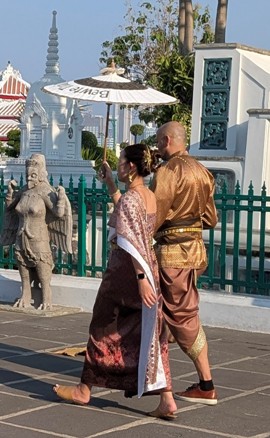
The ferry ride is a fun way to arrive, and with tickets sorted, we stroll into the temple grounds. The temple buildings on close inspection are beautiful, adorned with intricate porcelain and seashell mosaics, and everywhere we look we see people in Thai dress wandering around, having their photos taken. It is a touristy fad but it also adds to the the beauty and ambience of this place.
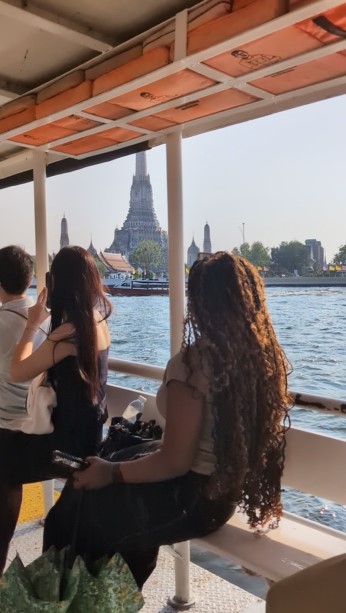
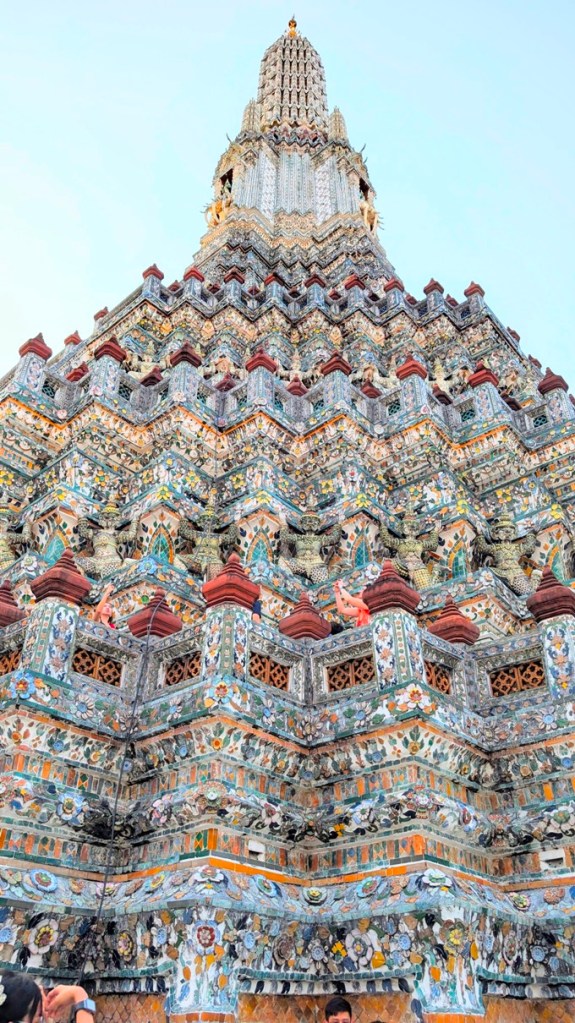
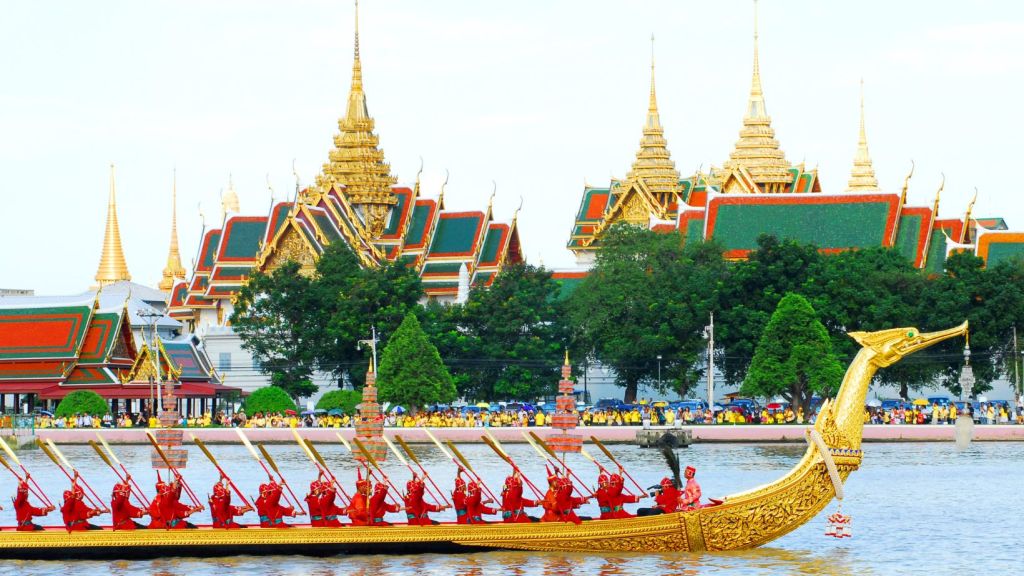
Wat Arun’s distinctive spires, or “prang” make it one of Thailand’s most identifiable landmarks. At around 82 m (270 feet) in height, the central prang of the Wat Arun Temple is the highest in Bangkok. During Kathina (after the end of the monk’s vassa rainy retreat), the king travels to Wat Arun in a procession of royal barges to present new robes to the monks. What a spectale that would be! (For more information about the Royal Barge Procession, visit The National Museum of Royal Barges whilst in Bangkok.
Our guide, Sun, is very informative, explaining the history and influences that have shaped this important temple.
Wat Pho (Reclining Gohttps://www.watpho.com/enld Buddha)
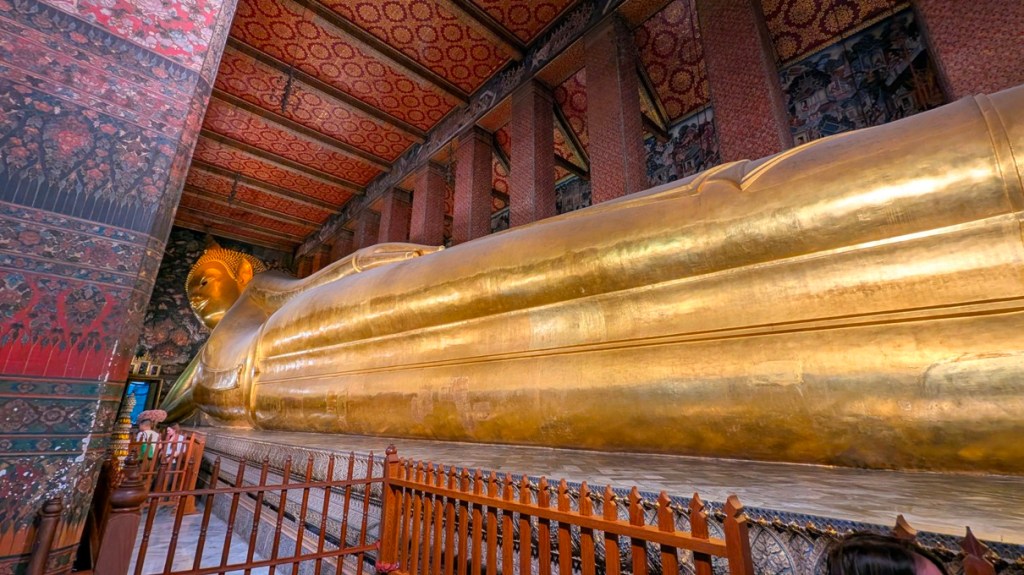
We are now back on the ferry and heading to Wat Pho, one of Bangkok’s most ancient temples dating back to the 16th century. It is home to more than one thousand Buddha statues, as well as the giant 46 m Reclining Gold Buddha.
This enormous gilded Buddha represents the entry of Buddha into Nirvana and the end of all reincarnations. The posture of the image is referred to as sihasaiyas – the posture of a sleeping or reclining lion.
The right arm of the Buddha supports the head which rests on two box-pillows encrusted with glass mosaics, while the feet, with mother-of-pearl inlaid soles, 3 m high and 4.5 m long, are divided into 108 arranged panels, each displaying illustrations of auspicious ‘laksanas’ (characteristics) of the Buddha.
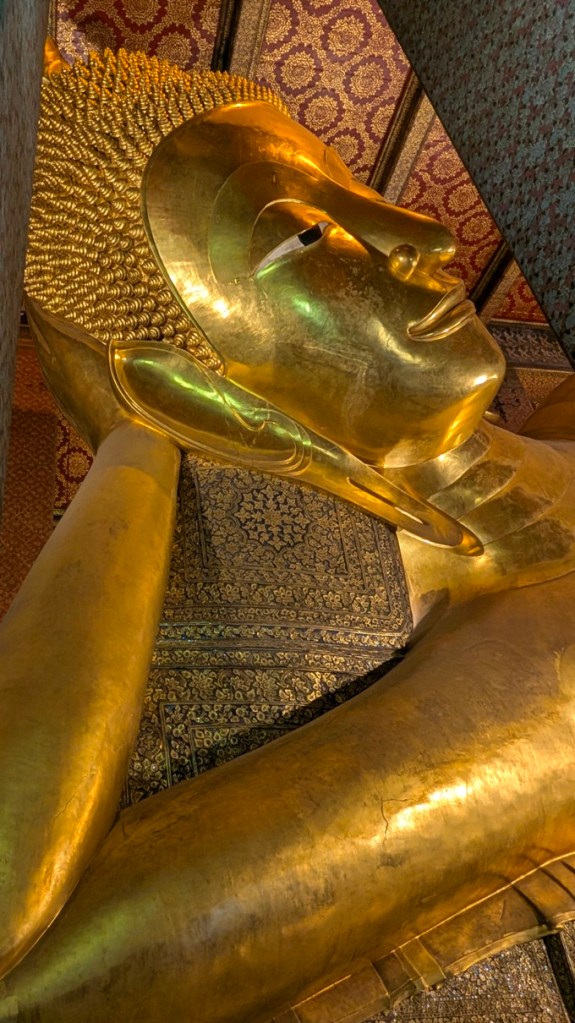
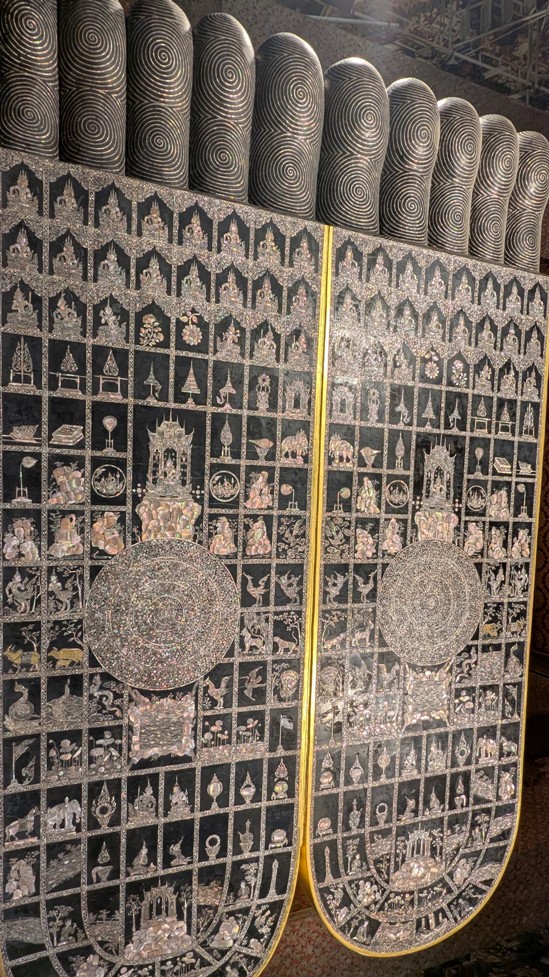
108 is a significant number, referring to the 108 positive actions and symbols that helped lead Buddha to perfection. At the center of each foot is a circle representing a chakra or ‘energy point’.
As Wat Pho was the first public university in Thailand, a pictorial encyclopedia in the form of engravings on granite slabs are found throughout the temple complex. Plaques inscribed with texts, illustrations on medicine, figures with pressure points for Thai traditional massage, and other subjects such as history, literature, proverbs, lexicography, and Buddhism can all be found here
it is also a great place to have a traditional Thai massage as Wat Pho is considered to be the leading school of massage in Thailand,
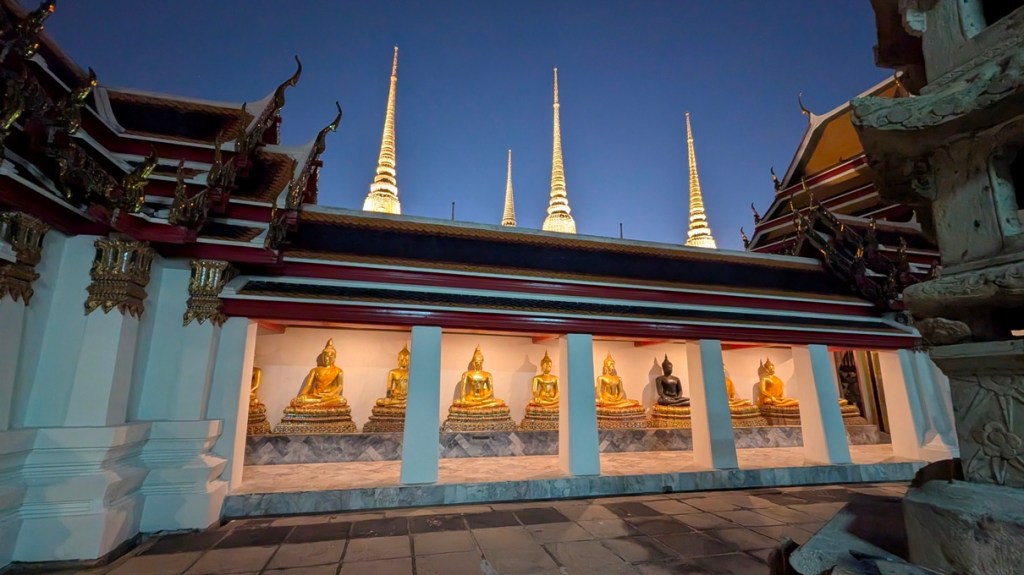
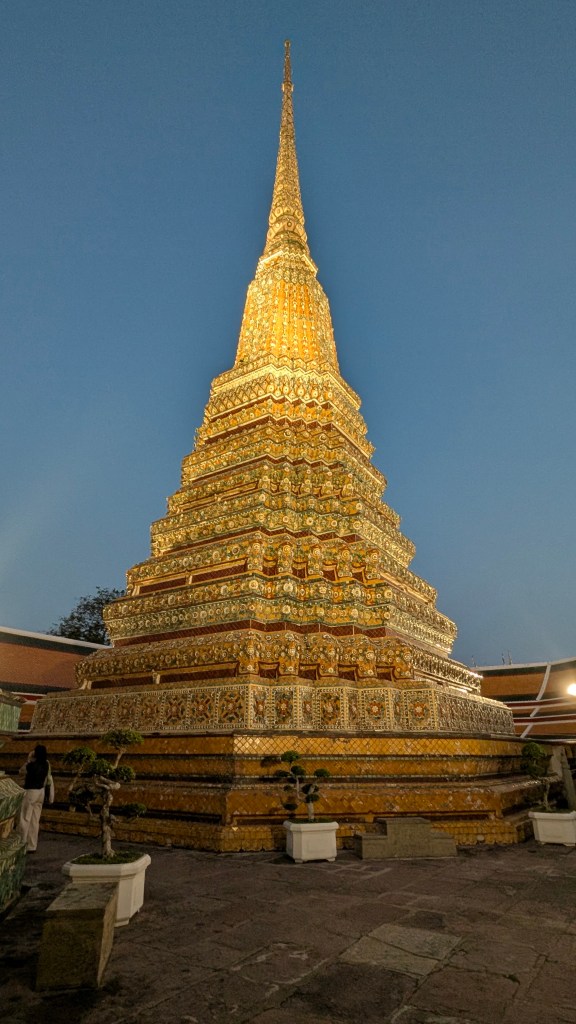
As night falls, the temple buildings of Wat Pho come to life in a golden light display that contrasts elegantly against the darkening inky blue sky above. The evening is cool and the crowds have gone home. We leave here feeling calm and fulfilled, ready for our next adventure – our tuk-tuk ride to the vibrant atmosphere of Chinatown. What a contrast it is as we wander along Yaowarat Road, taking in the buzzing streets, numerous street food stalls, local eateries, and modern day magic that is Bangkok
Bangkok: Evening Tour with Wat Arun, Wat Pho & Tuk Tuk Ride

 Pixsell Travels
Leave a comment